

Agentic AI: The Next Big Revolution Beyond ChatGPT
What if AI could do more than answer your questions? What if it could plan, make decisions, and help turn ideas into action? Artificial intelligence is entering a new phase — moving from generating answers to taking action. Welcome to the era of Agentic AI.
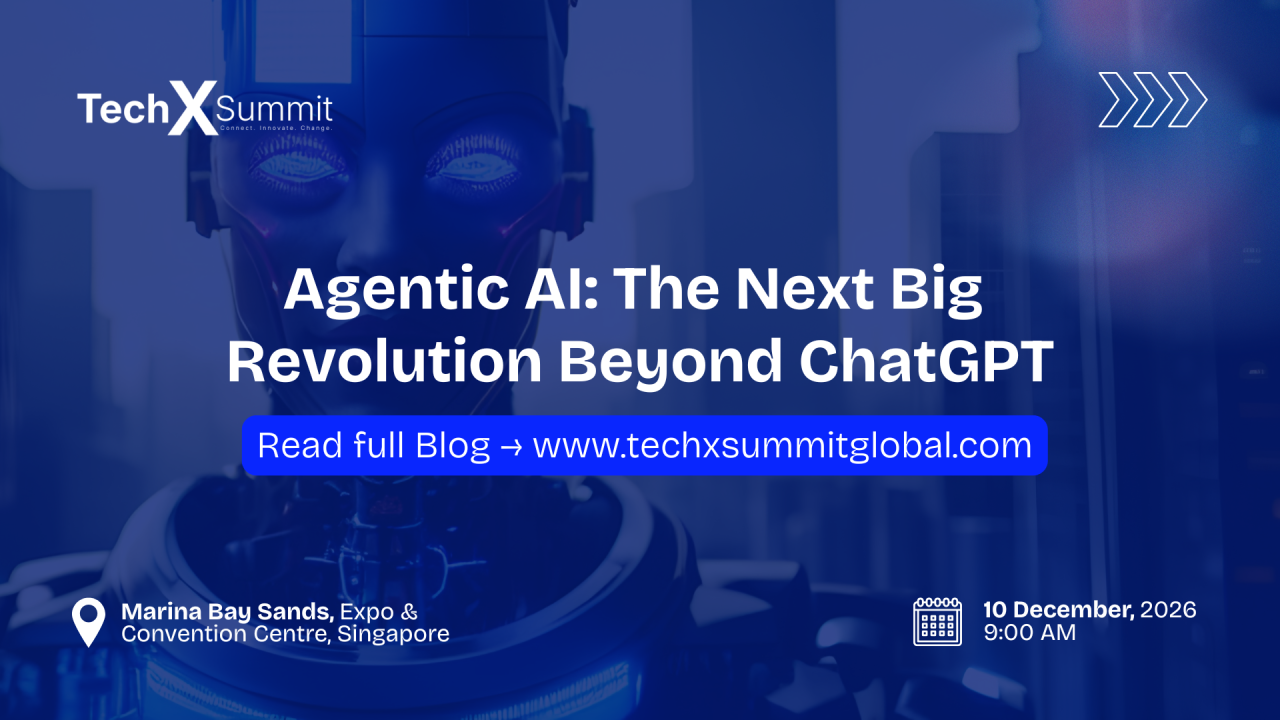
What if AI could do more than answer your questions? What if it could plan, make decisions, and help turn ideas into action? Artificial intelligence is entering a new phase. While tools like ChatGPT have transformed how we write, research, and create, the next evolution of AI is focused on something bigger: moving from generating answers to taking action. Welcome to the era of Agentic AI — a shift that promises to reshape how organizations across customer service, marketing, software development, and business operations actually get work done.
What Is Agentic AI?
Unlike traditional AI tools that primarily respond to prompts, Agentic AI systems can work toward defined goals by planning tasks, using connected tools, analyzing results, and determining their next steps within set boundaries. Imagine an AI assistant that doesn’t just draft a marketing plan but also researches competitors, organizes campaign ideas, and prepares tasks for a team to review. This ability to coordinate multiple steps — rather than just produce a single response — is what makes Agentic AI an exciting development in modern technology.
Where ChatGPT-style tools answer a question and stop, an AI agent treats the answer as one step in a larger workflow: it breaks a goal into subtasks, executes them in sequence, calls external tools and APIs to gather information, evaluates intermediate results, and adjusts its plan as it learns what works. The output is not a paragraph of text but a chain of completed actions — researched, validated, and ready for human review.
How Is Agentic AI Transforming Businesses?
Organizations across industries are exploring AI agents to improve productivity, streamline operations, and discover new ways to work smarter. By reducing repetitive work, AI agents can help professionals dedicate more time to strategic thinking, creativity, and meaningful business activities.
Customer Service
AI agents help resolve inquiries and coordinate customer support workflows — pulling customer history, routing complex cases to the right specialist, drafting responses for review, and following up after resolution. The result is faster first-touch resolution and support teams freed to handle the cases that genuinely need human judgment.
Marketing
AI agents research audiences, prepare content drafts, and analyze campaign performance — synthesizing competitor moves, surfacing audience segments, generating creative variants, and reporting which campaigns are over- or under-performing. Marketers shift from manual data-gathering to interpreting results and shaping strategy.
Software Development
AI agents assist with coding, testing, and identifying potential errors — generating boilerplate, running test suites, flagging security issues, and proposing fixes for review. Engineering teams report shorter cycle times and more time spent on architecture, code review, and the harder design problems that benefit from human judgment.
Business Operations
AI agents analyze information, prepare reports, and recommend next steps — consolidating data across systems, surfacing anomalies, drafting operational summaries, and proposing actions for leaders to approve. Operations teams gain a persistent analytical layer that turns raw data into decision-ready insight without manual pulling and pivoting.
The Challenges Behind the Innovation
Despite its potential, Agentic AI comes with important challenges. Incorrect actions, data privacy concerns, security vulnerabilities, and unreliable outputs can create serious problems without proper controls. An AI that can take action can also take the wrong action — and the more tools and systems an agent is allowed to touch, the larger the blast radius of a mistake.
Businesses must establish clear permissions, monitor performance, and maintain human oversight for sensitive decisions. The objective isn’t simply to give AI more independence — it’s to make AI more useful, reliable, and responsible. That means scoped permissions, auditable action logs, human-in-the-loop checkpoints for high-stakes actions, and clear rollback paths when an agent goes off course. Governance is not a brake on Agentic AI; it is what makes it safe enough to deploy at scale.
What Comes Next?
The future could bring multiple AI agents working together — researching information, analyzing data, coordinating workflows, and supporting decisions across entire organizations. Rather than a single assistant, enterprises may run fleets of specialized agents that hand off tasks to each other the way teams of colleagues do today, each scoped to a domain and governed by the same permission framework.
However, success will depend on more than technology alone. Businesses will need the right strategy, skilled teams, reliable data, and strong governance to turn AI experimentation into meaningful results. The real competitive advantage will belong to organizations that know not only how to adopt AI, but how to use it wisely — pairing agent autonomy with human judgment, and treating governance as a first-class engineering discipline rather than a compliance afterthought.
What’s Next in Tech?
As Agentic AI continues to evolve, conversations around artificial intelligence, cybersecurity, digital transformation, and emerging technologies are becoming increasingly important. Technology leaders and businesses need opportunities to exchange ideas, explore new developments, and understand how innovation can create real-world impact. This is where global technology communities play an important role — connecting people who are not just observing the future but actively helping shape it.
Key Takeaways: Agentic AI Beyond ChatGPT
- From answers to action: Agentic AI plans tasks, uses connected tools, evaluates results, and decides its next steps within set boundaries — moving AI from a single response to a chain of completed actions.
- Four functions already transforming: customer service (resolving inquiries and coordinating workflows), marketing (audience research, content drafts, performance analysis), software development (coding, testing, error identification), and business operations (analysis, reporting, recommendations).
- Real challenges, real controls: incorrect actions, data privacy, security, and unreliable outputs require scoped permissions, performance monitoring, auditable logs, and human-in-the-loop oversight for sensitive decisions.
- Multi-agent future: fleets of specialized AI agents collaborating across workflows — but success depends on strategy, skilled teams, reliable data, and strong governance, not on the technology alone.
- Competitive advantage = wise adoption: the winners will be organizations that pair agent autonomy with human judgment and treat governance as a first-class engineering discipline.
Conclusion
Agentic AI marks a genuine inflection point — the moment artificial intelligence moves from producing text to completing work. The organizations that win this phase will not be the ones with the most agents, but the ones with the discipline to scope permissions, audit actions, keep humans in the loop for what matters, and treat governance as the foundation that makes autonomy safe. As customer service, marketing, software development, and business operations are reshaped one workflow at a time, the conversation about responsible Agentic AI adoption belongs at the same table where business strategy is set. Tech X Summit Global Singapore 2026 — taking place on 10 December 2026 at Marina Bay Sands Expo & Convention Centre, Singapore — is where technology leaders, founders, and operators will debate exactly these questions. Grab Your Pass: https://techxsummitglobal.com/
